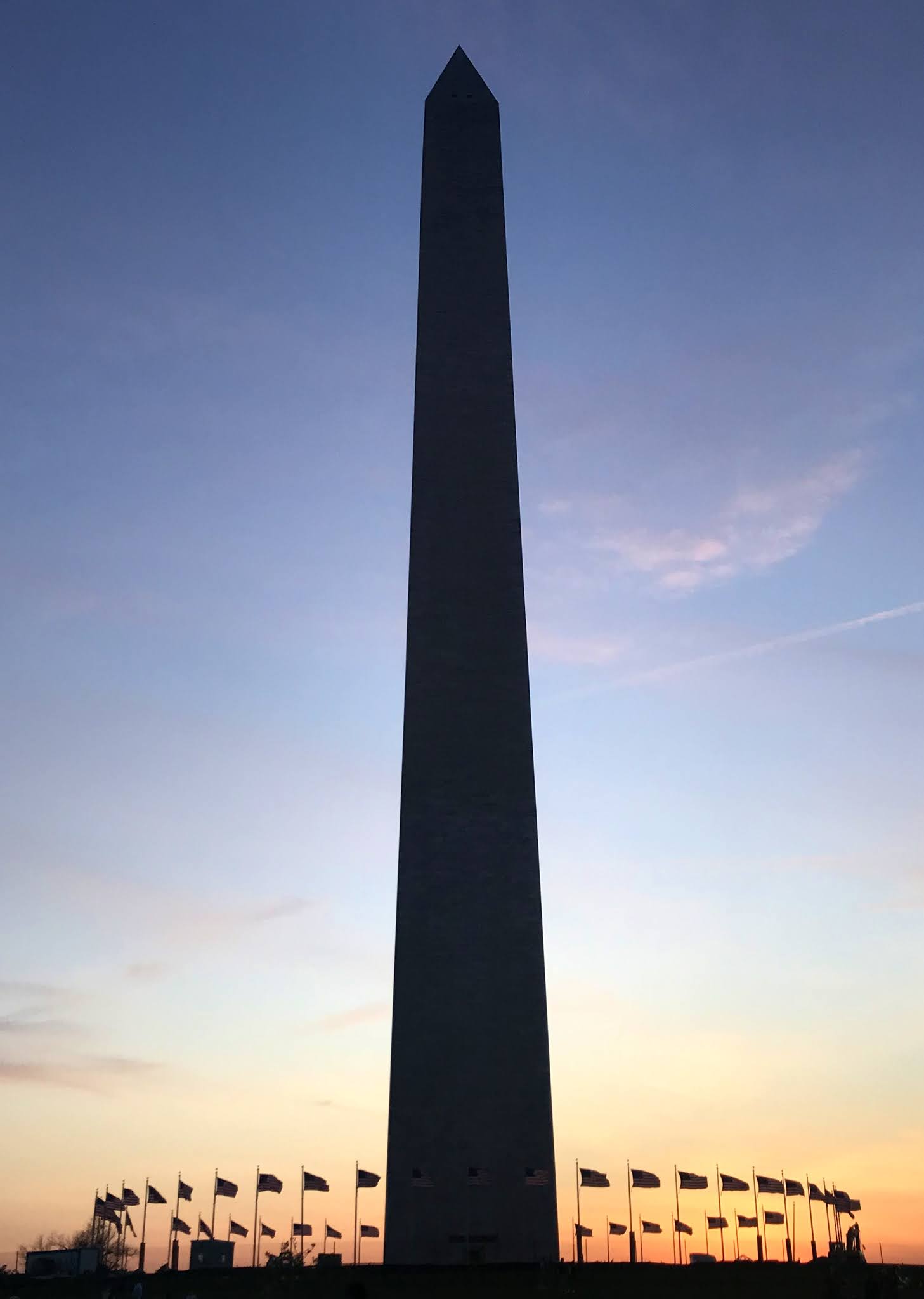
Our kids are history nerds. Specifically, American History nerds.
It wasn't something we planned. We didn't push them into it.
Personally, I find history fascinating now, but I wasn't really that
way as a kid. This wasn't our agenda. We didn't force it down their
throats. No, they truly love it. On their own.
 |
“If
there must be trouble, let it be in my day, that my child may have
peace.”
― Thomas Paine
|
Part of me likes to
think it all started on our trip to Mount Rushmore. Something about
being it that place, and seeing those faces carved on a mountain. It
sparked an interest in them that hasn't subsided. In reality, though,
it probably has more to do with their love of the American Girl
franchise. When they lived. Where they lived. How they lived.
Whatever it was, anything historically American, they devoured.
Presidents and First Ladies. Battles and Wars. What people ate. How
they dressed. How they died. All of it. So, since we were going to be
in some of the most historically significant places in our country,
we would seize the opportunity. We'd witness first hand where our
country was born. We'd stand in the same places our founding fathers
once stood. We'd visit their final resting places. We'd take it all
in. We would learn from our
past.
It all started in Boston. And by
that, I mean our country began there. The first ideas of Revolution
and Independence were born in what was once the largest city in the
colonies. Eventually, most of the major events that lead us down the
path of war also happened there. The thinkers, the radicals, the
patriots all began in Boston. So, it made sense that we started our
field trip there, at the center of colonial resistance.
 |
“The tree of liberty must be refreshed from time
to time with
the blood of patriots and tyrants.”
- Thomas Jefferson
|
March
5, 1770. For two years now, tensions had been building, as British
troops occupied Boston in an attempt to squash the ever growing
dissent. Fights between citizens and soldiers were commonplace. That
night, a crowd began harassing a group of soldiers guarding the
customs house. Snowballs were thrown. Someone discharged their
musket, sparking a volley into the crowd. Five civilians were killed.
 |
| "Life, liberty and the pursuit of happiness" |
Today Boston is a big city, filled
with all the trappings that comes with being one. Yet over the
centuries, as it grew into what it is, a serious effort was made to
preserve the important historical places amid the bustling
metropolis. The freedom trail is one result of that. This 2½ mile
long path runs through the city and connects (literally with red
bricks) all these important spots. Museums. Churches. Meeting houses.
Burial grounds. Historic markers. We would begin here.
Throughout
my schooling, the American Revolution was hammered into our brains.
Every year. We learned the causes. The dates. The people. The places.
They glamorized our founding fathers. Here were these great men,
these great leaders that stood up to tyranny, broke free and formed
this new, mighty country. Together. United. Facing a powerful enemy.
All for the noble causes of freedom and liberty. Pretty great stuff.
That's what I always thought I guess. The patriots all stood up
against England, and collectively started our nation. I should have
thought about it more. When have you ever known a group of anybody to
come together, in unison, and easily agree on something? On anything?
Trying to appease everyone is impossible. Sometimes picking a
restaurant for a group can be unnerving. But, starting a revolution?
Forming a new country? A new government? As a group? Unthinkable. Not
without constant conflict and disagreement the entire way.
 |
| “These
are the times that try men's souls.”
-Benjamin Franklin |
December
16, 1773
Angered by what they thought to be unfair taxes on tea, a
growing number of American patriots demanded action. On this
night, they did. There was still much disagreement on what was
the correct course of action. For days, the well known leaders
debated and argued at the Old South Meeting house about how to send a
message to England. They had had enough. Meanwhile, several
lesser-known men (acting on orders from the men still arguing) went
to the Boston harbor, and dumped £9,000 of East India Company tea
overboard. While still pretending to debate their actions, they had already
been carried out.
Constant
conflict and disagreement are two things our family understands.
Jenny and I have been together for over 20 years. Our three young
girls are close together in age. We all spend a lot of time together.
More than most families. It's inescapable. Fights happen. There is
drama. There is conflict. Often. Our kids are home-schooled, so there
is plenty of opportunity throughout each and every day for them to
flip out on each other. And they do. Daily. Then, eventually they
separate. They go to their rooms, or outside or wherever it is, just
to get away from each other. Time passes, and they get over it. They
forget, or move on. They go back to their default mode of “actually
liking each other, or at least pretending to... for now...” Then
something sparks it again. Repeat that on a never-ending loop, and
that is our lives. On the road, it's not that simple. When you're in
a hotel, where can you run off to and pout? The closet? (Nadia did
once.) When schedules are tight, how can you make time for fighting?
You just do. When it's crowded and bustling where you are, how can
you yell it out? How can you cry and scream? You find a way. (we
have)
 |
| "One if by land. Two if by sea." |
April
18-19 1775
War
was eminent now. As British troops continued to build, the issue was
no longer IF they would attack, it was WHERE and WHEN. Upon hearing
word that England was advancing, Paul Revere, and the Sons of Liberty
warned the countryside of their advance. Lexington and Concord would
be first. War had begun.
A
full three years went by between the massacre and the tea party.
Three years before taking grand measures. It was then three more
years after that before we declared our independence. By today's
standards that seemed like a long time to me. What took so long? Why
the delay? Sure, things took longer back then. I get that.
Correspondences were slow. Travel was even slower. But it wasn't just
that. It was all the infighting. The bickering. Just like our family,
drama slowed everything down. Getting everyone to agree on something
so grand was challenging. So, then surely once the war began,
everyone in the colonies would come together in agreement, right?
If Boston was where the ideas for this country were
dreamed up, then Philadelphia is where they became a realization. That would be our next stop.
The
last piece to my East Coast family, is my Mom's only brother, my
Uncle Jimmy. He lives in the house he grew up in, just outside of
Philadelphia.
After
retiring from a long and accomplished career as a high school band
director, Jimmy followed his other real passion: acting. As a
professional theater actor, he has performed in dozens of shows, and
just the right one was in store for our visit.
 |
| James Conte as Hopkins (in the hat) |
1776:
The Musical
tells the story of the Continental Congress and their long drawn out
debates over what eventually became the Declaration of Independence.
The cast were all members of that original Congress. Each
representing a different colony. The hard selling John Adams. The
wise Ben Franklin (uncannily played by John Morrison.) The young and unproven
Thomas Jefferson. The drunken Stephen Hopkins (hilariously played by
Jimmy!)
 |
“We
must all hang together,
or assuredly we shall
all hang separately.”
-Benjamin Franklin
|
They sat and argued. And argued. And argued. Each bringing
their own ideals into the mix. Their own agendas. No one seemed to
agree about anything. It felt like nothing was ever going to get
done. What were these guys, a bunch of siblings? Even though we already knew the ending, (SPOILER
ALERT:
They signed it.) we kept wondering, how did this ever happen? How did
anything get accomplished? Their infighting was endless. These colonies wanted it this way. These other colonies wanted it that way. Vote like
this. Say it like that. Nothing. Everything. Nothing. Imagine a colonial 12
Angry Men. Now add one more guy. And some singing. That was the show.
It was compelling. And telling. And maddening. By the end, the girls
had picked out the delegates they liked and the ones they couldn't
stand. (“stupid South Carolina guy”)
They were definitely paying attention.
 |
"Let
us dare to read, think, speak, and write."
-John Adams
|
July 2, 1776 The Continental Congress unanimously agrees to declare their independence from Britain. Two days later the
document stating our intentions was signed at Independence Hall, forever changing our country.
We
had seen who these great leaders were. We stood in some of the homes
where they lived. We walked through buildings they walked through. We
sat in rooms they debated in. We knelt at their grave sites. We
started to see them differently. They weren't perfect. They had
hidden agendas. Some were rude. Loud. Self righteous. Ambiguous.
Their ideas weren't perfect either. They fought. They compromised.
They reasoned. They made it work. Somehow.
 |
“"I know not what course others may take, but as for me, give me liberty or give me death!"
- Patrick Henry
|
 |
“Tell me and I
forget.
Teach me and I remember.
Involve me and I learn.”
- Benjamin Franklin
|
But
in the end (obviously) our Founding Father's did it. They came to an
agreement. They put their names down on that document. Together. They
worked out their differences. They made compromises. All for a
greater good. Maybe my schooling was right all along. Maybe, it's
really WHAT these men accomplished that's important. Not necessarily
how they got there. Or what was said to each other. Or the
compromises they made. Maybe none of that mattered. Maybe that's the
lesson our kids will take away from this. People disagree. Things are
said. Arguments ensue. But, that's how things get solved. That's how
great things are created. Adversity. Struggle. Resolution. It never
comes easy. It shouldn't. But in the end, it's worth it.
In
the end, our travels won't be remembered for the fights on the
subways. The tears in the streets. The disagreements on what to
listen to in the car. In then end, it's what we do that matters.
 So,
I guess, we should continue on fighting then. Continue arguing. Keep
crying. And yelling. Then we'll just work it all out. We'll resolve
it. We'll grow from it. Things will get better.
So,
I guess, we should continue on fighting then. Continue arguing. Keep
crying. And yelling. Then we'll just work it all out. We'll resolve
it. We'll grow from it. Things will get better.
And
who knows, maybe a new country or two will come out of it.
Lesson
learned.